
Notes from Ljubljana: Reflections on a ZRC-SAZU secondment
24 Nov 2025
0
Notes from Ljubljana: Reflections on a ZRC-SAZU secondment
I spent a recent Marie Skłodowska-Curie Staff Exchange month at the Research Centre of the Slovenian Academy of Sciences and Arts (ZRC-SAZU) in Ljubljana, Slovenia. My goal was straightforward: sit with colleagues who study youth, cities and the digital everyday, and test how the questions we ask in Barcelona travel across contexts. From the first meetings, it was clear that Ljubljana is an ideal place for this dialogue: public-space change and digital cultures are not separate topics here but two sides of the same story.
Most days began with conversations that moved easily from the street to the screen. We spoke about pedestrianisation, tourism rhythms and summer heat, and immediately linked those shifts to family negotiations over phones, school practices and the peer dynamics that make “being reachable” feel non-optional. I used the stay to refine a short, readable brief on youth in a phone-first city (how housing costs, platform work and changing public spaces shape coordination, visibility and pressure in everyday life) and to gather feedback on a survey we plan to field in Barcelona. Several colleagues helped me outline light, qualitative add-ons that could work on both sides of the Mediterranean: small focus groups, one-week diaries, and neighbourhood vignettes that keep young people’s own words at the centre.
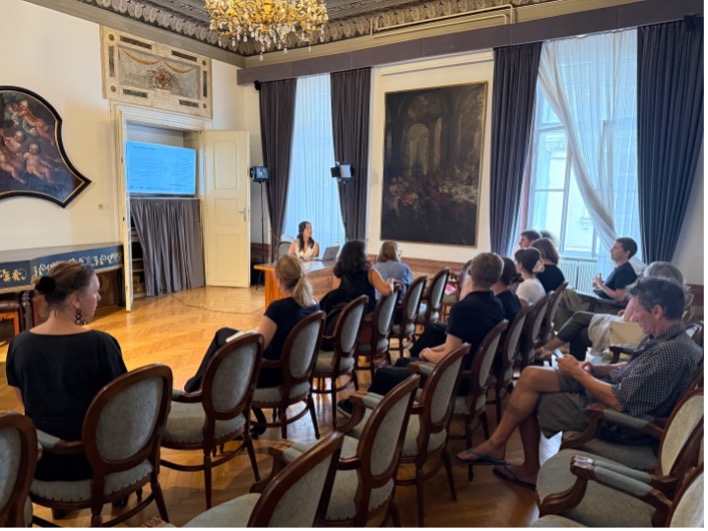
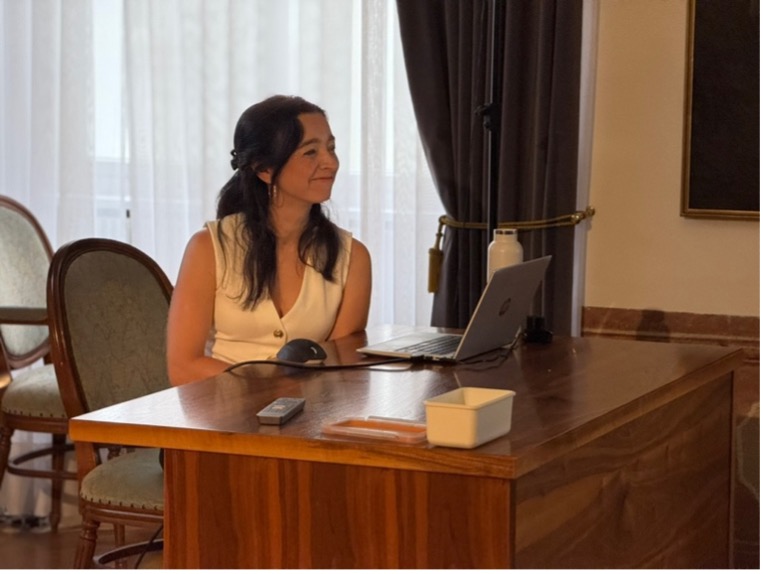
Midway through the month I gave an open lecture at ZRC-SAZU on youth, public space and digital sociality. The discussion in the room was lively and continued outside it: the talk drew media coverage that helped carry the debate to a broader audience, including an appearance on N1 TV and a radio interview. I’ll add both here for anyone interested: N1 TV interview and RTV SLO radio. It was heartening to see the topic resonate beyond the institute and to receive thoughtful questions from educators, students and parents following the broadcasts.
Some of the most meaningful exchanges centred on mental health and migration. Conversations with Martina Bofulin and Sanja Cukut opened a valuable window onto support pathways for migrants in Ljubljana: how access works in practice, where bottlenecks appear, and how community organisations help people navigate services. Their insights pushed me to think more concretely about how urban form, administrative rules and digital tools intersect in moments of vulnerability, and how research can better reflect those frictions without reducing lives to labels.
I am also grateful for generous, probing conversations with colleagues at ZRC-SAZU and the University of Ljubljana working in social well-being, such as Tanja Oblak-Črnič and Katja Ošljak. Our discussions about adolescents’ media repertoires, parental mediation and local “disconnect” initiatives helped me sharpen language and methods: less moral panic, more attention to how phones operate as infrastructure for coordination, care and belonging. I left with a tighter survey instrument, a clearer structure for ongoing writing, and a realistic pathway to comparative work that respects differences between places while keeping questions aligned.
What I bring back is simple: a better map. It includes people, readings and methods to keep, and a small list of next steps that are actually doable, and planning a return visit that builds on the relationships started this month. My thanks to everyone at ZRC-SAZU for the warm welcome and for the coffees that turned into real research plans.
Written by Cristina Montañola-Sales (IQS – Universitat Ramon Llull), Visiting Researcher at ZRC-SAZU